Bioinformatics ReviewBioinformatics Review
Notification Show More
Font ResizerAa
  •  Home
  • Docking
  • MD Simulation
  • Tools
  • More Topics
    • Softwares
    • Sequence Analysis
    • Algorithms
    • Bioinformatics Programming
    • Bioinformatics Research Updates
    • Drug Discovery
    • Phylogenetics
    • Structural Bioinformatics
    • Editorials
    • Tips & Tricks
    • Bioinformatics News
    • Featured
    • Genomics
    • Bioinformatics Infographics
  • Community
    • BiR-Research Group
    • Community Q&A
    • Ask a question
    • Join Telegram Channel
    • Join Facebook Group
    • Join Reddit Group
    • Subscription Options
    • Become a Patron
    • Write for us
  • About Us
    • About BiR
    • BiR Scope
    • The Team
    • Guidelines for Research Collaboration
    • Feedback
    • Contact Us
    • Recent @ BiR
  • Subscription
  • Account
    • Visit Dashboard
    • Login
Font ResizerAa
Bioinformatics ReviewBioinformatics Review
Search
Have an existing account? Sign In
Follow US
Tips & Tricks

How to remove HETATMS and chains from PDB file?

Tariq Abdullah
Last updated: August 31, 2023 12:52 pm
Tariq Abdullah
Share
3 Min Read
Removing HETATM and chains from pdb files
SHARE

This is a basic tutorial on removing the hetero-atoms (HETATMS) and chains from PDB files. It is an essential step for computational and molecular dynamics simulation.

Contents
  • 1. Using a text editor
    • Removing HETATOMS
    • Removing Chains
  • 2. Using Pymol
    • Reference

There are two simple ways to remove HETATMS and chains from PDB files.

1. Using a text editor

Removing HETATOMS

  • Open your PDB file in an editor such as notepad++ (in Windows) or gedit/notepadqq (in Linux).
  • Go to the end of the file. You will see many lines with ‘HETATM’ in the first column from the right (Figure 1).
  • Remove these lines. DON’T remove the last two lines (‘MASTER’ & ‘END’).
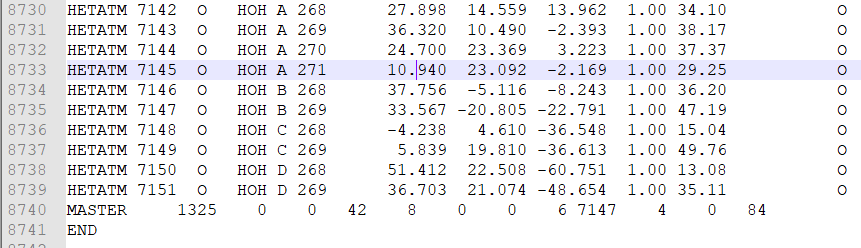
Figure 1. Removing hetatoms

Figure 1 HETATM rows in a PDB file.

Removing Chains

Now, look at the fifth column in Figure 1. As you can see, there are four chains in that protein: A, B, C, and D. Let’s suppose we need chain A only, then we have to remove the rest of the three chains.

  • After removing HETATM rows, start removing other chains from the row having ‘TER’ in the first column from the right (Figure 2).
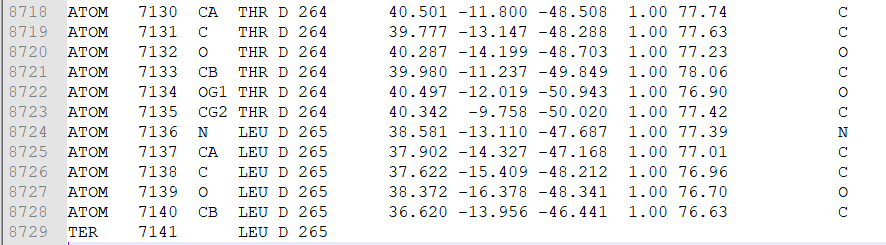
Figure 2 Removing chains from PDB files

Figure 2 Chain D in the PDB file.

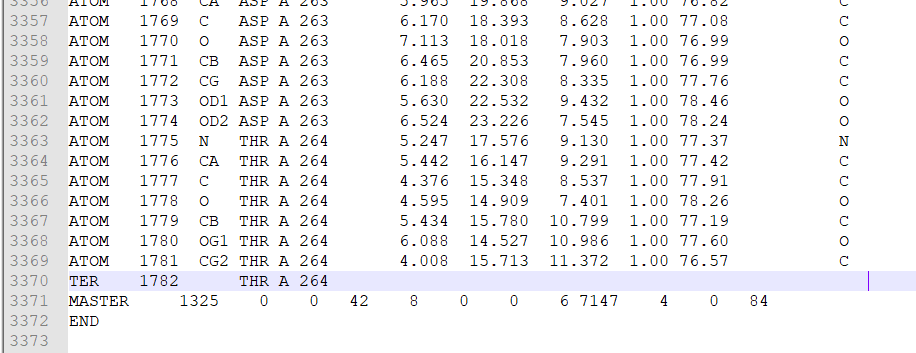
  • Keep removing until you reach the line showing ‘TER’ in the first column and ‘A’ in the fifth column (Figure 3). Now, you must be left with the last two rows (MASTER & END) at the end of the file.
  • Now, save this file.

Figure 3. Removing chains from PDB files

Figure 3 Remaining chain A and the last two rows (MASTER & END) at the end of the file.

2. Using Pymol

The first option seems tedious as compared to using Pymol.

  • Open the PDB file in Pymol.
  • Go to the bottom left panel. There you will see some options including ‘S’ and ‘F’.
  • Click on ‘S’. It will display the chains/ amino acid residues present in that structure.
  • Just above these options, you will see: “Selecting: Residues” written there (Figure 4).

Figure 4. Removing chains from PDB file using PYMOL

Figure 4 Bottom-left panel in Pymol showing the ‘S’ option.

  • Left-click with the mouse on Residues one time. It will show ‘Chains’ (Figure 5).
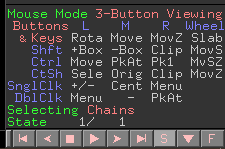
Figure 5. Removing chains from PDB file using PYMOL

Figure 5 Bottom-left panel in Pymol showing the ‘Chains’ option.

  • Let’s suppose you need only chain A. Go to the displayed amino acid residues. Scroll to the end.
  • Select the chains that you want to delete by left-clicking with your mouse.
  • Go to the top right panel. There you will find three rows including ‘(sele)’. Click on ‘A’ (means action). It will show a small window, select ‘remove atoms’. It will remove the selected chains.
  • Now, go to File –> Export Molecule –> PDB Options. Check ‘Write CONECT records for all bonds’ and uncheck ‘Write segment identifier (segi) column’. The latter is optional. Click ‘Save’.

Now, you have successfully removed all HETATMS and irrelevant chains from your PDB file.


Reference

  1. The PyMOL Molecular Graphics System, Version 1.2r3pre, Schrödinger, LLC.
Share This Article
Facebook Copy Link Print
ByTariq Abdullah
Tariq is founder of Bioinformatics Review and Lead Developer at IQL Technologies. His areas of expertise include algorithm design, phylogenetics, MicroArray, Plant Systematics, and genome data analysis. If you have questions, reach out to him via his homepage.
Leave a Comment

Leave a Reply Cancel reply

You must be logged in to post a comment.

ai tools vs traditional tools in bioinformatics
AI Tools vs Traditional Tools in Bioinformatics- Which one to select?
Algorithms Artificial Intelligence Machine Learning Software Tools
AI vs Physics in Molecular Docking
AI vs Physics in Molecular Docking: Towards Faster and More Accurate Pose Prediction
Artificial Intelligence Drug Discovery Machine Learning
10 years of Bioinformatics Review: From a Blog to a Bioinformatics Knowledge Hub!
Editorial
Starting in Bioinformatics? Do This First!
Tips & Tricks

You Might Also Like

DockingTips & Tricks

Site-specific docking: Frequently Asked Questions & answers for starters

May 21, 2020
Tips & Tricks

Bioinformatics and programming languages- what do you need to know!

May 20, 2020
Video Tutorial: Fix broken Vina output in DS Visualizer
DockingTips & TricksVideo Tutorial

Video Tutorial: Fix broken Vina output in DS Visualizer.

March 13, 2025
hot topics in bioinformatics
Tips & Tricks

Current Research Topics in Bioinformatics

September 25, 2020
Copyright 2024 IQL Technologies
  • Journal
  • Customer Support
  • Contact Us
  • FAQs
  • Terms of Use
  • Privacy Policy
  • Cookie Policy
  • Sitemap
Welcome Back!

Sign in to your account

Username or Email Address
Password

Lost your password?

Not a member? Sign Up