Bioinformatics ReviewBioinformatics Review
Notification Show More
Font ResizerAa
  •  Home
  • Docking
  • MD Simulation
  • Tools
  • More Topics
    • Softwares
    • Sequence Analysis
    • Algorithms
    • Bioinformatics Programming
    • Bioinformatics Research Updates
    • Drug Discovery
    • Phylogenetics
    • Structural Bioinformatics
    • Editorials
    • Tips & Tricks
    • Bioinformatics News
    • Featured
    • Genomics
    • Bioinformatics Infographics
  • Community
    • BiR-Research Group
    • Community Q&A
    • Ask a question
    • Join Telegram Channel
    • Join Facebook Group
    • Join Reddit Group
    • Subscription Options
    • Become a Patron
    • Write for us
  • About Us
    • About BiR
    • BiR Scope
    • The Team
    • Guidelines for Research Collaboration
    • Feedback
    • Contact Us
    • Recent @ BiR
  • Subscription
  • Account
    • Visit Dashboard
    • Login
Font ResizerAa
Bioinformatics ReviewBioinformatics Review
Search
Have an existing account? Sign In
Follow US
NGSTools

IonCRAM: New Tool for Ion Torrent Sequence Files Compression

Tariq Abdullah
Last updated: September 28, 2020 10:02 pm
Tariq Abdullah
Share
2 Min Read
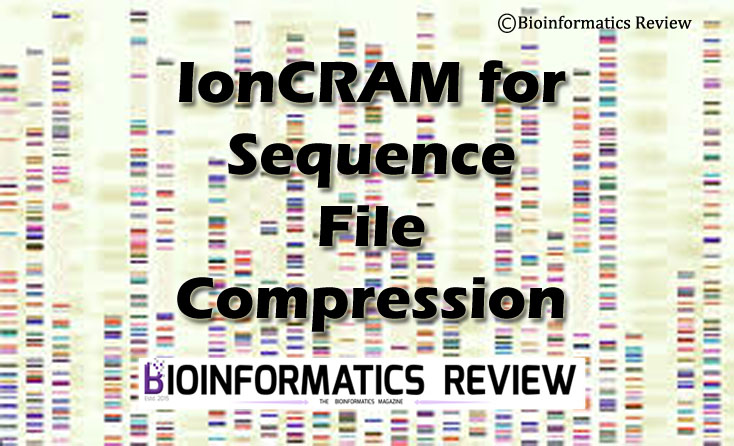
IonCRAM for Ion Torrent file compression
SHARE

One of the major next-generation sequencing (NGS) technologies that are most frequently used in medical research is Ion Torrent. Software for Ion Torrent machines provides output in BAM files that are huge in size. Additionally, their compression is also space expensive.

Contents
  • How IonCRAM works?
    • References

For efficient compression of these BAM files into CRAM format, new software has been introduced. This software is known as IonCRAM [1]. IonCRAM is a lossless reference-based compression tool. It is capable of compressing BAM files into archiving CRAM files such that it could save up to 43% of space. This is open-source software and is freely available at GitHub, CodeOcean, and http://ioncram.saudigenomeproject.com.

How IonCRAM works?

Its algorithm is based on binning the flow signals and quality values initially introduced by Illumina [2]. At first, the algorithm sorts the reads by genomic coordinates in the BAM file followed by their prefix while sorting the respective CIGAR string to bring similar reads closer to each other. The sorted reads are then scanned for blocks of reads that are mapped to the same locus. Finally, flow signals from each block are collected and compressed together.

IonCRAM is available for Ubuntu and CentOS. For further reading, click here.

References

  1. Shokrof, M., Abouelhoda, M. IonCRAM: a reference-based compression tool for ion torrent sequence files. BMC Bioinformatics 21, 397 (2020).
  2. Illumina inc., “Understanding Illumina Quality Scores,” 2012.

TAGGED:bam compressionNGSngs data
Share This Article
Facebook Copy Link Print
ByTariq Abdullah
Tariq is founder of Bioinformatics Review and Lead Developer at IQL Technologies. His areas of expertise include algorithm design, phylogenetics, MicroArray, Plant Systematics, and genome data analysis. If you have questions, reach out to him via his homepage.
Leave a Comment

Leave a Reply Cancel reply

You must be logged in to post a comment.

ai tools vs traditional tools in bioinformatics
AI Tools vs Traditional Tools in Bioinformatics- Which one to select?
Algorithms Artificial Intelligence Machine Learning Software Tools
AI vs Physics in Molecular Docking
AI vs Physics in Molecular Docking: Towards Faster and More Accurate Pose Prediction
Artificial Intelligence Drug Discovery Machine Learning
10 years of Bioinformatics Review: From a Blog to a Bioinformatics Knowledge Hub!
Editorial
Starting in Bioinformatics? Do This First!
Tips & Tricks

You Might Also Like

How to install ClusCo on Ubuntu (Linux)?
SoftwareTools

How to install ClusCo on Ubuntu (Linux)?

May 20, 2022
How to install VMD on Ubuntu?
SoftwareTools

How to install VMD on Ubuntu?

March 14, 2022
Install SAMtools on Ubuntu
SoftwareTools

Installing SAMtools on Ubuntu

August 3, 2024
SAUTE- New assembler for sequence assembly using target enrichment
SoftwareTools

SAUTE- New assembler for sequence assembly using target enrichment

August 16, 2021
Copyright 2024 IQL Technologies
  • Journal
  • Customer Support
  • Contact Us
  • FAQs
  • Terms of Use
  • Privacy Policy
  • Cookie Policy
  • Sitemap
Welcome Back!

Sign in to your account

Username or Email Address
Password

Lost your password?

Not a member? Sign Up